ABOUT
FEEDSCONTACT
EMAIL DIGESTCANDY RATINGSTYPE
BRAND
COUNTRY
ARCHIVES
|
Friday, April 6, 2012
Happy Easter
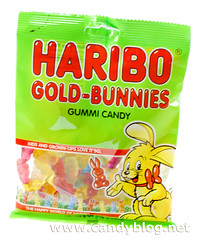
A Happy Haribo gummi rabbit for Easter. POSTED BY Cybele AT 10:35 am Candy • Easter • Highlight • Featured News • Thursday, April 5, 2012
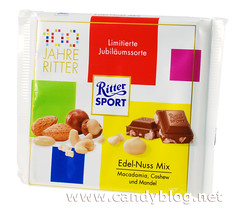
Ritter Sport 100th Anniversary Edel-Nuss Mix + Bonus Previews
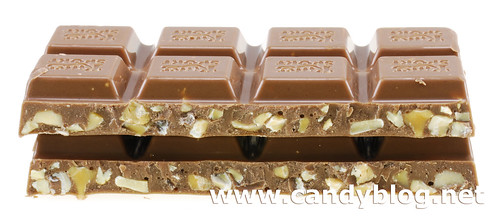
Though the company is celebrating their 100th year, the Ritter Sport square bar, as we’ve come to know it, is not quite as old as that. The Sport bars were introduced in 1932 ... so in 20 years you can look forward to another centennial. The bar is a simple one, just milk chocolate with a blend of crushed nuts: almonds, cashews & macadamia nuts.
I picked up my bar in Germany at Kaufhof in December, but they may be available at import shops in North America and airports during the year. The bar is lovely and really quite tasty. It’s odd, the milk chocolate is sweet and smooth, as usual. The nuts are crunch and plentiful. But the flavor is quite interesting. For a while after munching on the bar I was convinced there was honey in it, it has that same sort of toasted almond and honey flavor that Toblerone has. But there was none in the ingredients, so I can only credit the toasting of the nuts that give it that soft, sweet and nutty flavor. I would buy this bar regularly. It doesn’t quite dethrone my favorite, the Knusperflakes (Corn Flakes) bar, but it’s terrific in its own right.
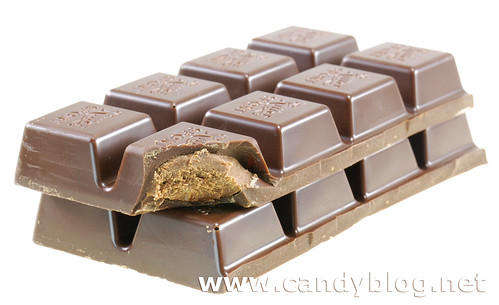
Ritter Sport Dunkle Pfefferminz is a dark chocolate bar with a peppermint flavored dark chocolate cream center. It also features a dash of alcohol, giving it a creme de menthe sort of blast.
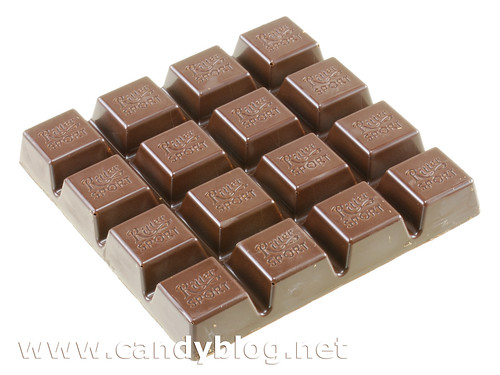
The bar looked great.
The cream center was smooth and had a strong peppermint flavor, but not so strong as to overpower the dark chocolate notes, which were slightly acidic and woodsy. It’s pretty decadent and silky, I didn’t feel the need to eat more than two or three sections at a sitting. I hope this comes to the United States at some point, it’s a keeper and unlike anything else we have on the market.
One other item I picked up in the back room was a bag of these little bon bons. They were simply called Pfefferminz and in a clear plastic bag. Each individual piece was wrapped in an unmarked aqua wrapper. I have no idea what their purpose was, but the center was not quite the same as the Dunkle bar. They were good, but milk chocolate and a little more fudgy and firm.
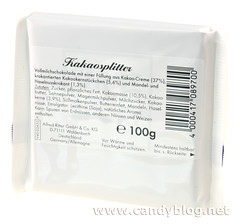
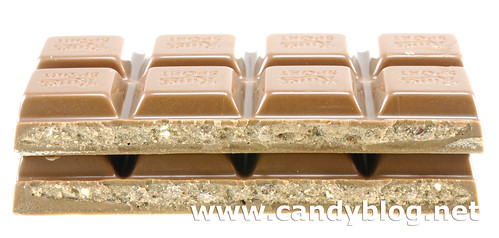
I believe kakaosplitter (kakaokernstuckchen) is the German word for cacao nib. The bar is milk chocolate and features a firm chocolate cream filling studded with crispy cacao nibs.
The bar is quite milky and has a good nutty flavor overall. The nibs are toasted in a way that seems to have caramelized them. So instead of being chewy or dense, they’re quite light and crispy, but with a sort of uneven chocolate flavor, depending on the bite. I liked the treatment of the nibs, but I didn’t care for the overall sweetness of the bar. It makes me wish I’d found this hazelnut and nib solid bar.
The last bar I picked up looked just like the others on the outside, a generic white with the simple name of Ritter Sport Kokosmakrone. Honestly, I didn’t know what I was picking up because I didn’t know what Kokosmakrone was, I thought it was another cocoa nib confection. Instead it’s a coconut cream. How fun! Aside from the Mounds and Almond Joy bars, there’s not much in the real coconut realm in candy bars in the United States.
The bar is milk chocolate again with a white cream filling with both toasted coconut and rice flakes for crunch. It smells an awful lot like coconut, the chocolate is infused with it to the point that the chocolate flavors are lost. I had to sequester the bar in its own ziploc bag before I finished it because I was afraid it was going to make my 100 Jahre bar taste weird. The filling is sweet and milky with a little salty hint. The coconut is more of a flavor than a texture, the crispies add a new dimension of texture that you don’t really get in American coconut candies. Mostly I like this because it’s not like anything else you can get for less than $2. But, if I want coconut, I’m probably going to go for a Mounds bar. In all, I love Ritter Sport’s sense of adventure. The bars are made in a factory that processes a lot of different nuts, soy, dairy and products that may contain gluten. The Ritter Sport company sources much of their cacao from South and Central American and says it’s committed to ethical sourcing. Related Candies
POSTED BY Cybele AT 1:00 pm All Natural • Candy • Review • Ritter Sport • Chocolate • Coconut • Limited Edition • Mints • Nibs • Nuts • 8-Tasty • Germany • Wednesday, April 4, 2012
Jelly Belly Snapple Jelly Beans
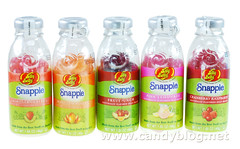
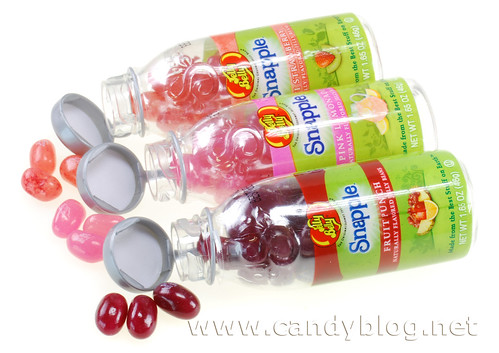
The candies come in a variety of packages from bulk mixes, peg bags to individual flavors. For the samples I got from Jelly Belly, they came in these cute little plastic bottles in the same shape as the Snapple glass bottles. They’re each filled with 1.65 ounces of one of the individual flavors.But you’re more likely to see packages with a mix of all five. Though I like just buying the flavors I like, in this instance the packages are unsustainable and wasteful.
As an American who remembers when Snapple was introduced nationally and their commercials with Wendy, the Snapple Lady I can say that I’ve always felt positive towards the brand. However, in all that time, I’ve probably had five or six of them. Even in my younger years when I did drink juice (rarely soda, even then), Snapple was always a little too bland for me. (I also don’t know how a company can say it’s made from the best stuff on earth if they’re using aspartame.)
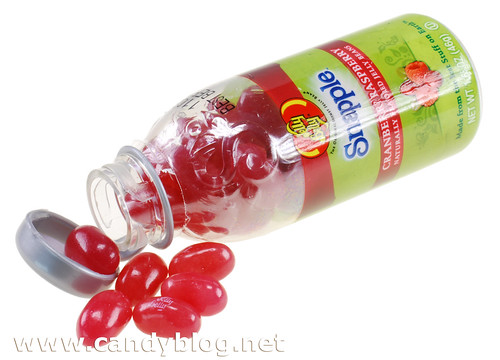
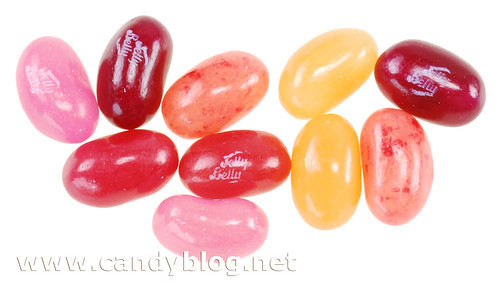
The bottles have a little twist off top with a ring that kept me from losing them (though I think if you pry them off, they’re like the rings from one of those spout milk jugs that cats love to play with until they end up under the fridge). Cranberry Raspberry are red with a light purple hue. They’re sweet and have a good floral berry flavor to them. There’s only a slight hint of tartness, which is too bad, because I love the zing of cranberries.
Pink Lemonade is kind of a weird product to start with. The beans here are quite pink and without much reason other than the fact that the color is in the name of the flavor. When I was a kid I thought that pink lemonade was pink because it had a touch of strawberry in it. But a little digging and I found out rather unsettling reasons for why early pink lemonade was pink. Anyway, Snapple’s classic Pink Lemonade is simply that, lemonade that’s been colored pink. This lemonade jelly bean is bland. There’s no tang, no real zest, just a mild lemon flavor. Kiwi Strawberry is salmon-pink. The flavor is quite nicely rounded. The strawberry is center stage, sweet and floral with those toasted sugar notes of cotton candy. There’s a hint of sour and a pleasant and refreshing melon-kiwi note to it.
Mango Madness is orange colored. The flavor is a mild mango or perhaps peach flavor. It lacks the intense pine and tartness that real mangoes have. Instead it’s rather one-note with just the sweet, Indian mango flavor. Fruit Punch is a luxurious looking dark red color, a color I might mistake for root beer. I wasn’t looking forward to it, as fruit punch has never been a favorite flavor of mine. The notes are distinctive and have that authentic fruit punch flavor (is that guava and pineapple?) but still tastes natural. There are lots of red berry and cherry notes and a little twang of pineapple and either guava or papaya (maybe both). It was all sweetness with only a fleeting burst of tartness as part of the candy shell. Overall, the flavors were mild. If you’re the type of person who tried Jelly Belly and thought, “My goodness, these would be good if they were less flavorful.” Then perhaps these were the Jelly Belly you were waiting for. I think they give naturally flavored & colored candy a bad reputation. I already know Jelly Belly can make good tasting beans without artificial flavors and colors, so I can only surmise that this is what Snapple customers want. If I were a huge fan of these, I could see myself re-using the little bottles by buying bags of the mixes and refilling for easy portioning. This mix isn’t really to my taste, so I don’t see myself buying it again. I can see it getting a lot of play in places where you don’t normally see Jelly Belly just because of the brand and flavor recognition of Snapple. Jelly Belly does most of these flavors better in their Superfruit Mix or their Citrus Mix. Related Candies
POSTED BY Cybele AT 11:39 am All Natural • Candy • Review • Jelly Belly • Jelly Candy • Kosher • 5-Pleasant • United States • Monday, April 2, 2012
Gimbal’s Sour Gourmet Jelly Beans
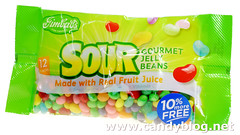
The jelly bean mix has a gourmet price point, at $4.49 for me at the CVS, but the bag is big and it’s made in the USA. The mix includes 12 flavors in bold colors.
The beans are absolutely lovely to look at. They’re small and well made, each was quite perfect. The Gimbal’s factory advertises that it’s free of most major allergens, including peanuts, tree nuts, dairy, eggs, gluten, gelatin and soy. As a jelly bean product they’re also fat free and contain no high fructose corn syrup (but I’ve never actually seen a jelly bean made with HFCS). The front of the package says they’re made with real fruit juice, and that’d be apple juice. It also says that it’s a good source of Vitamin C, but that’s only 10% of your RDA in a serving of 37 beans (about 1.4 ounces). But as much as they tout the freedom from allergens, there are still plenty of other ingredients some folks may avoid, such as artificial flavors and colors.
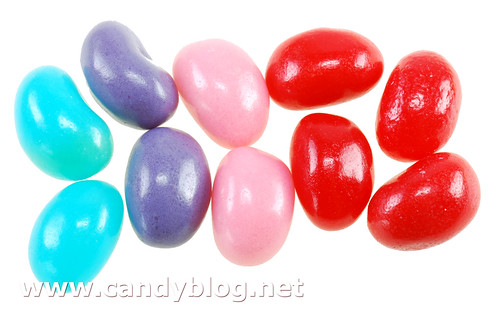
Most of the beans were opaque, but in the case of beans of similar colors, one was translucent, the other opaque. The structure of the bean is the same as other jelly beans. A jelly center (modified food starch give it its smooth texture) covered in a grainy and flavored shell. In the case of these beans, they jelly center is the sour part, so the sourness goes through and through. They’re tiny, sized like most other gourmet beans like Jelly Belly. Sour Lemon was fully formed, a mix of juice and peel but with a more boiled marmalade note than a raw flavor. Sour Grapefruit was fantastic. There was a lot of zest and that pine-type bitterness along with a biting tang of juice. Sour Tangerine was sour and juicy but unlike the other two citruses, the zest notes didn’t come out until the very end. Sour Mango was also orange, but opaque. The flavor was similar to peach, and if I wasn’t told it was mango, I probably would have guessed that. It was soft and tart but had that fuzzy fruit flavor that mangoes and peaches share.
Sour Watermelon was the darker green bean. It was pretty good, it reminded me a lot of Jolly Ranchers in the best way possible. Sour Apple was kind of difficult for me to like. At first I though it was watermelon, it was just too vague. There was an authentic note of apple to it, but not much else. Sour Lime was almost a key lime. There was soft vanilla note to it but it really finished sour.
Sour Blueberry was refreshing, it had a good berry note to it, almost a raspberry. I wouldn’t say it was really blueberry, but still quite fun. Sour Grape is an unusual flavor for jelly beans. I see it a lot in hard candies but not so much in jelly beans or gummis. This grape is much like a Pixy Stix, tart and with that malic acid tangy bite and vague artificial grape flavor of soda. Sour Strawberry had a great mix of flavors, it really had a nice floral start, like a fluffy wad of cotton candy. Then the flavor developed with strong tartness and finished with strawberry jam. Sour Pomegranate had a lot of very dark floral berry notes to it. It never quite rang true as pomegranate, but it was still a very good bean, not as sour as the others. Sour Cherry was well done. The flavor was bold and less medicinal than some I’ve had, with green notes and of course that sour finish that most of the beans had. Overall, it was a good bunch of beans. Even those that I didn’t really like that much such as cherry or mango were still quite good enough that I just ate them instead of trying to pick them out. It’s hard to tell some beans apart unless you’re someplace well lit, so sort before going to movies if you really don’t want to get a flavor you dislike. I did like this flavor set better than the Jelly Belly sour variety which only has five flavors, but that’s purely personal preference. The intensity satisfied me quite quickly, without giving me acidic burns on my tongue. The price is a bit high compared to generic beans but less than half of what you’d pay for Jelly Belly. They do pack quite a punch and I’m unlikely to finish this 13 ounce bag before Easter even with daily grazing. Related Candies
POSTED BY Cybele AT 11:48 am Candy • Review • Easter • Gimbal's Candy • Jelly Candy • Kosher • Sour • 8-Tasty • United States • Sav-On/CVS • Friday, March 30, 2012
Haribo Gold Bears from Turkey and Germany
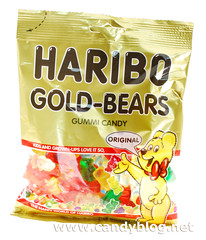
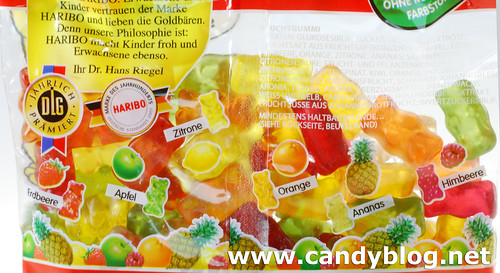
I’ve been told over the years that the German Haribo products are the best. The Haribo products we most often see here in the United States, especially the Gold Bears, are made in either Turkey or Spain. So while I was in Germany I made sure to pick up a bag of the original version made in Bonn, Germany. Flipping over the bag, it was immediately clear that they’re different. There’s an extra flavor.
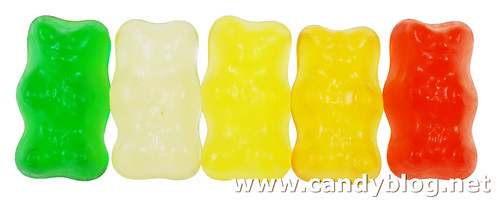
The German Gold Bears have six flavors: The Turkish or Spanish Gold Bears have only five flavors: Further, the German Bears are made with all natural colorings. Here’s an array of Bears and Bunnies for color comparison:
On top are the German Gold Bunnies, packaged for the American market, in the middle are the German Gold Bears purchased in Germany and on the bottom are the Turkish Gold Bears purchased in the United States. So let’s start where things are weird. First, the Green Gummi Bear. As you may have noticed in the listing above, in the United States, the green gummi bear is Strawberry.
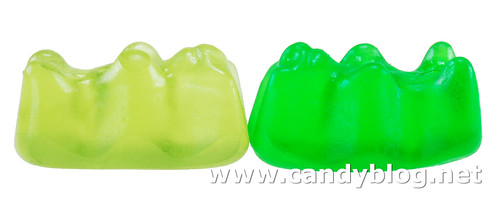
I compared the colors of the Green Gummi Gold Bears because they show the most difference between the countries. The German bear is a light olive color, not a true green. Other than that though, the bears are the same shape and mass.
I thought maybe one was taller than the other, or thicker, but the variations are just that, variations across all the bears. Some are slightly thicker or taller, some have different facial expressions. But there’s no real difference in the moulding. Turkish Strawberry (Green) compared to German Strawberry (Pink): The Turkish bear is just slightly firmer. The flavor (once you close your eyes and forget that it’s not lime or green apple) is light and only slightly floral. It’s tangy, but not puckeringly tart. Mostly it’s a bland gummi bear. The German bear is softer and just slightly more pliable. It’s jammy and has a good blend of florals and tartness, and though it’s slightly more flavorful, I wouldn’t say that there’s a huge difference in the intensity, just the nuances. Germany Wins.
Turkish Orange compared to German Orange: this is tough. Both looked virtually the same, and the textures were also so similar. The zesty and tart notes on both were dead on. The German bear tasted every so slightly more like freshly squeezed juice, but that could have been my imagination. Tie.
Turkish Pineapple (clear) compared to German Pineapple (clear): The Turkish version had an ever—so-slight yellow cast to it, which really only showed when I placed the bears next to each other on white paper. Pineapple happens to be my favorite flavor for the bears and this was no exception. The Turkish bear actually had enough tartness to make my jaw tingle. It’s sweet and floral and just wonderful. The German version was just as good, but had an extra little flavor towards the end, a more intense thing that I can’t quite peg as pineapple zest, but that sort of buzz that comes with fresh pineapple. Even though there was a slight difference, I will indiscriminately gobble both. Tie. Turkish Lemon (yellow) compared to German Lemon (yellow): Lemon is a great flavor and Haribo really can’t fail. There’s a wonderful blend of zest and juice in the Turkish version, with so much lemon peel that it verges on air freshener. The German version is more like a candied lemon peel or marmalade, slight more bitterness but still plenty of juice. Turkish Win. The last one is the German Apple. It tastes, well, like tart apple juice. Honestly, I’m glad it’s not in the bags that are sold in the United States, it would be one I’d pick around ... and there currently aren’t any Haribo Gold Bears that I don’t like.
It does not. The Green Bunny is actually strawberry. But what’s more disappointing about these Haribo Gold Bunnies is that they’re terrible compared to both the Turkish Bears and the German Bears. Sure, the shape is cute and the colors are all natural, but the flavors are pale and watered down.
So if you’re a Green Apple fan, it’s worth it to seek out the true German Haribo Gold Bears. If you don’t care, then the Turkish version that we’ve been served all these years is great ... it’s not quite as intense, but it’s still a good quality product. The other think I noticed is that I paid one Euro (about $1.30) for my 200 gram (7 ounce) bag of German bears ... and I paid $1.50 for my Turkish bears, which only has 5 ounces in it. The German Bunnies were on sale for $1.00 at Cost Plus. Related CandiesPage 115 of 466 pages ‹ First < 113 114 115 116 117 > Last › 
|
Meticulously photographed and documented reviews of candy from around the world. And the occasional other sweet adventures. Open your mouth, expand your mind.
  SEARCHSearch the Candy Blog archives

    
FEATURED NEWS ITEMS
COPYRIGHT NOTICEAll content (text and photos unless otherwise credited) is copyright 2005-2026 by Cybele May Please do not use my photos without prior permission directly from me, they represent what I ate in preparation for these reviews and are not to be used for other purposes. Design by Hop Studios
|
||||||||||||||||||||||||||||||||||||||||||||||||


 SUPERB
 YUMMY
YUMMY  TASTY
TASTY  WORTH IT
  TEMPTING
  PLEASANT
  BENIGN
  UNAPPEALING
  APPALLING
  INEDIBLE